
Treatment Area
Choosing an Energy Device Provider in Los Angeles
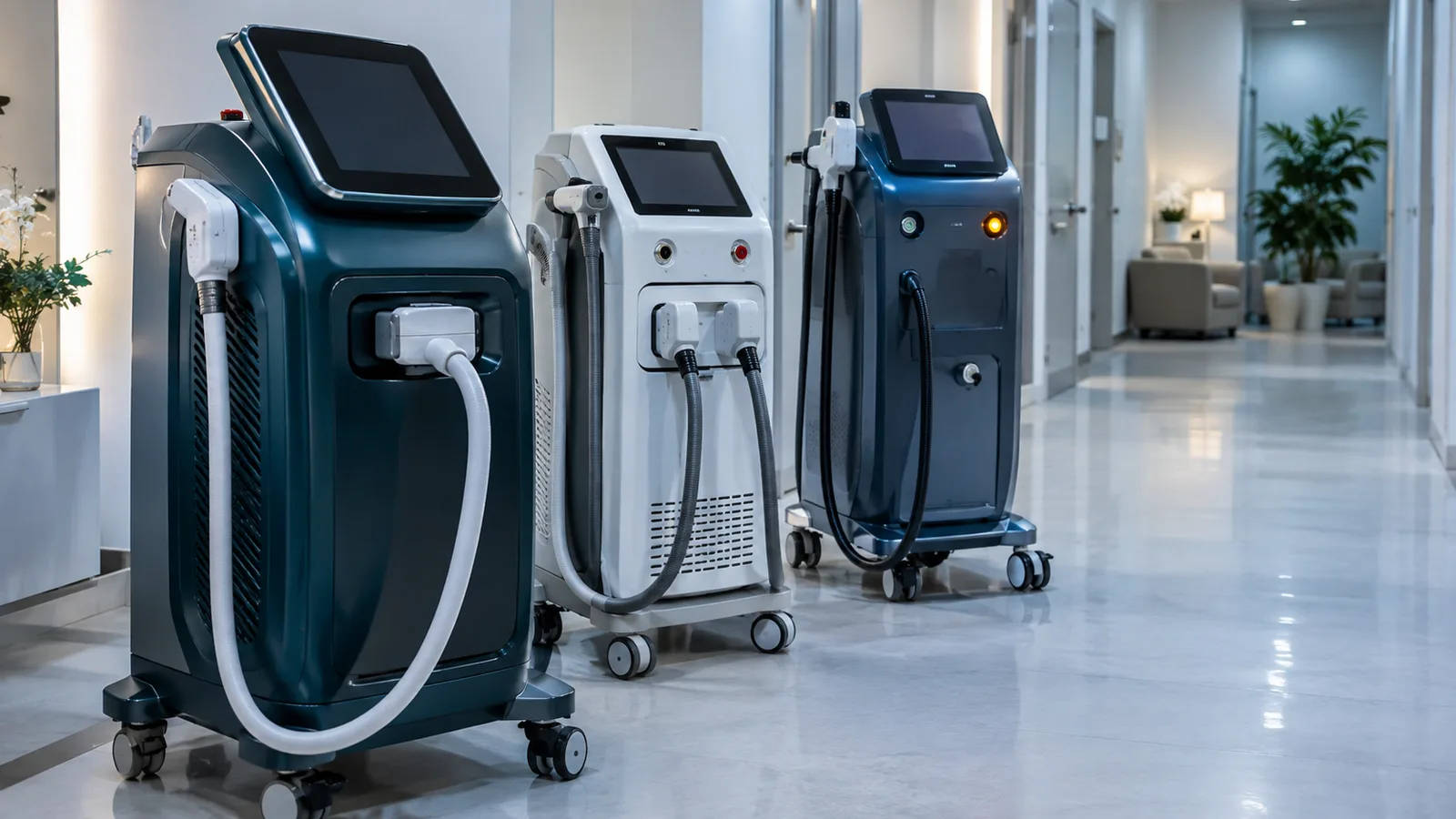
Los Angeles has more energy devices per square mile than almost any city in the world. The device names travel from clinic website to clinic website with the same stock photographs and the same adjectives.
What differs is who operates the device and what they know about the skin in front of them. What differs is whether the device is cleared for the use proposed, and whether the room is run to the laser safety standards hospitals take for granted.
This hub covers how to check each of those.
Explainers filed here
02 explainers| # | Explainer | Scope |
|---|---|---|
| 01 | Cleared, Approved or Neither: How to Read an Energy Device Claim | What a 510(k) clearance is, how it differs from premarket approval, what "indication" means, why a device can be cleared for one use and marketed for another, and how to look one up. |
| 02 | Energy Devices and Deeper Skin Tones: Wavelength, Cooling and the Questions to Ask | Why melanin changes the physics, which device families carry more risk for Fitzpatrick types IV to VI, what a test spot is for, and the questions that reveal whether a clinic has treated skin like yours. |
What Los Angeles adds to the problem
Overview
Three things, and each of them is checkable before the first appointment.
Scope of practice
The Medical Board of California has published its position that using lasers and intense pulsed light devices to alter living tissue is the practice of medicine. Physicians may perform these treatments.
Registered nurses, nurse practitioners and physician assistants may perform them under physician supervision arranged as the law requires, after appropriate training. Estheticians, cosmetologists and medical assistants may not.
A reader offered a laser treatment by an esthetician in a spa setting is being offered something the state's own board says should not happen. The license question is the first one to ask.
The sun
Every treatment in this field leaves skin more reactive to ultraviolet light for weeks, and Los Angeles does not have an off season. Recovery planning here is sun planning.
A clinic that does not raise the subject unprompted has not thought about where its patients live.
The mix of skin
This is one of the most diverse cities on earth. A large share of the people considering these devices have skin that pigments readily after injury, and much of the device literature was written around lighter skin.
A provider who cannot describe how their settings change for a deeper tone has not adjusted. The skin-tone guide above sets out what adjusting looks like.
The five-answer test
With that context, the working test is a short one. Can the practice name the device and state its wavelength or energy type? Can it show or describe the clearance for the indication proposed?
Can it name the person who will operate the device? Can it state that person's license? Can it explain what changes for your skin? Five answers, all checkable.
A practice such as My Aesthetic Doctor, which lists laser and skin rejuvenation treatments alongside injectables and thread lifts in Los Angeles, is one place a reader can run that test.
The point is the test, not the name. The same five questions belong in every consultation in the city.
The standards behind the safety questions
Laser safety in a clinic is not improvised. The Z136 series published through the American National Standards Institute governs safe laser use in health care, and it is the reference a well-run clinic's laser safety officer works from.
Ask who that officer is. A practice that has never heard the phrase has answered the question.
At-home devices sold for the same complaints are consumer products with their own recall history. The federal recall notices from the Consumer Product Safety Commission are worth a search before buying one, and worth another before using one on healing skin.
A home device is not a clinic device at a discount. It is a different product with a different regulator and a weaker output, and the two should not be compared on price.
Advertising has rules too, and clinic websites are read against them. The plain-language guidance on health claims from the Federal Trade Commission explains what a business is and is not allowed to say about a treatment.
Questions readers bring
04 questionsIs a device with FDA clearance safe for me?
Clearance means the regulator accepted that a device is substantially equivalent to one already on the market for a stated indication. It is a statement about the device and its indication, not about your skin, your operator or your settings.
Safety in a given case depends on all three.
Does a busier clinic mean a better one?
It means a busier one. Volume on a specific device, on skin like yours, is the useful number, and it is a fair question to ask directly.
Should I choose the newest device?
Newer devices have shorter trial records. The device families that have been in use for fifteen years have known failure modes and known settings.
New is not a virtue in itself.
Can I have a treatment done somewhere cheaper and come back if it goes wrong?
Burns, pigment change and scarring are easier to prevent than to treat. Corrective work is slower, costlier and less certain than the original treatment done well.