
Treatment Area
Laser Skin Tightening, Device by Device
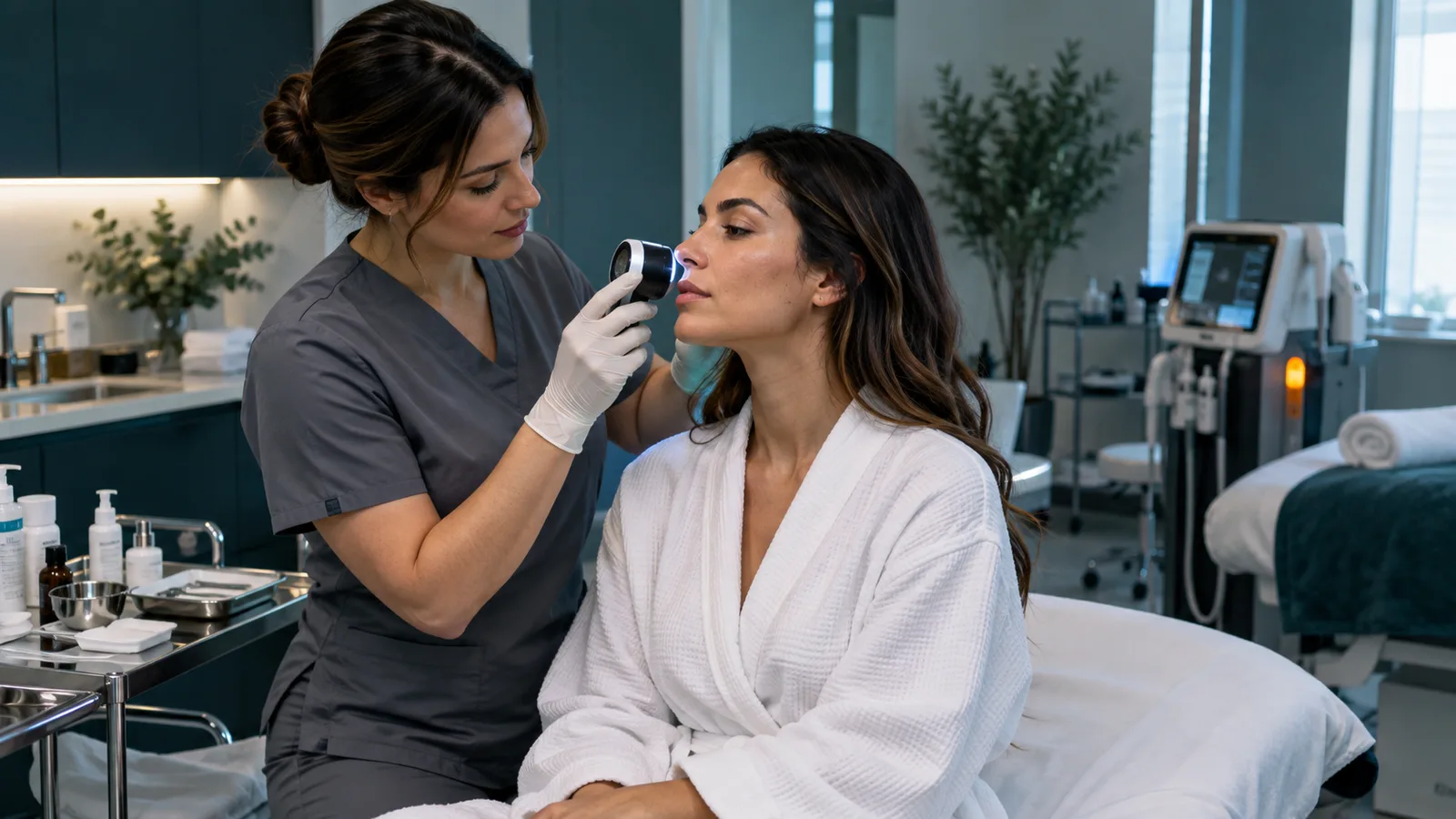
The devices in this category heat the dermis or the layer just beneath it. The heat makes existing collagen contract and prompts new collagen to form.
Over a period of months the skin becomes somewhat firmer. Every word in that sentence is doing work, and "somewhat" is the one clinics leave out.
This hub collects the guides on how tightening devices work, what Endolift adds to the picture, and where heat stops being the right tool.
Explainers filed here
03 explainers| # | Explainer | Scope |
|---|---|---|
| 01 | Laser Skin Tightening in Los Angeles: How It Works and What to Expect | The mechanism, the four device families that share it, the realistic size and timing of a result, and how a consultation in this city should go. |
| 02 | Laser Skin Tightening or a Thread Lift? Where Energy Stops and Threads Begin | Two treatments sold for the same complaint that do different things: which suits which face, what each is cleared for, and how to compare quotes that are not comparable. |
| 03 | Endolift Laser in Los Angeles: What the Neck and Jawline Treatment Involves | A subdermal fiber rather than a surface handpiece, what the 1,470 nanometer wavelength is absorbed by, how to check the device's regulatory status, and what recovery involves. |
How to read this hub
Overview
From the reader side, the choice often turns on what the loose skin is attached to. Skin that has lost firmness responds to heat.
Skin that has slid because the fat and ligaments beneath it have moved does not. A device cannot lift what it can only warm, and the three guides above are ordered around that line.
What tightening devices have in common
Four device families dominate the tightening category in Los Angeles. Monopolar and bipolar radiofrequency heat the dermis by passing current through it. Microfocused ultrasound deposits heat at fixed depths under the surface.
Radiofrequency microneedling delivers heat through insulated needles. Subdermal lasers, of which Endolift is the best-known brand, pass a fiber under the skin and heat from below.
They differ in depth, in how they are felt, and in what their clearance letters say. They share a ceiling. None of them produces a surgical result, and any provider who says otherwise is selling.
The physics is checkable
Collagen begins to denature at around 60 to 65 degrees Celsius. Tightening devices are designed to bring target tissue near that range while keeping the surface cooler.
Readers who want the plain heat-transfer physics rather than a clinic's version can find it in the public science material at the Department of Energy, whose laboratories did much of the early laser work.
The lesson is that heat spreads and tissue varies. A device setting that is right for one neck is wrong for another.
Transparent measurement has a look, and device marketing rarely has it. The field data methods published by the USGS are a model of what publishing an outcome method plainly looks like.
What the evidence says about size
On the ground, the evidence points to modest, gradual change. Trials of radiofrequency and ultrasound tightening tend to report improvement in a majority of treated people, measured by blinded photograph review.
A meaningful minority show little visible change. Results build over two to six months as new collagen forms, and they fade over one to two years as the skin ages on.
A reader who goes in expecting a lift will be disappointed. One who expects the skin to feel firmer to the touch and look slightly crisper at the jaw is more likely to be satisfied.
Sorting the jawline before choosing the machine
The sorting between skin quality, volume and structure is worth more than any single device.
A Los Angeles practice with energy devices, threads and injectables under one roof is at least in a position to say which category a given jawline needs.
That is a reason to ask the sorting question first. It is not a reason to accept the first answer, and the consultation guide in the tightening article sets out how to test it.
A local note on recovery
Los Angeles heat is a recovery variable. Tightened skin that is still warm and swollen does not enjoy a 95-degree afternoon in the Valley.
Readers planning a session in late summer can check the day's conditions with NOAA before deciding whether the walk home is wise.
A first week planned around shade is a small thing, and it protects the result. The aftercare guide in the resurfacing hub covers the sun in full.
The reason a wavelength behaves as it does inside tissue is standard optics, taught without anything for sale. The public lectures and explainers from Berkeley Lab cover light and matter with more care than any brochure.