What the treatment involves
Consultation
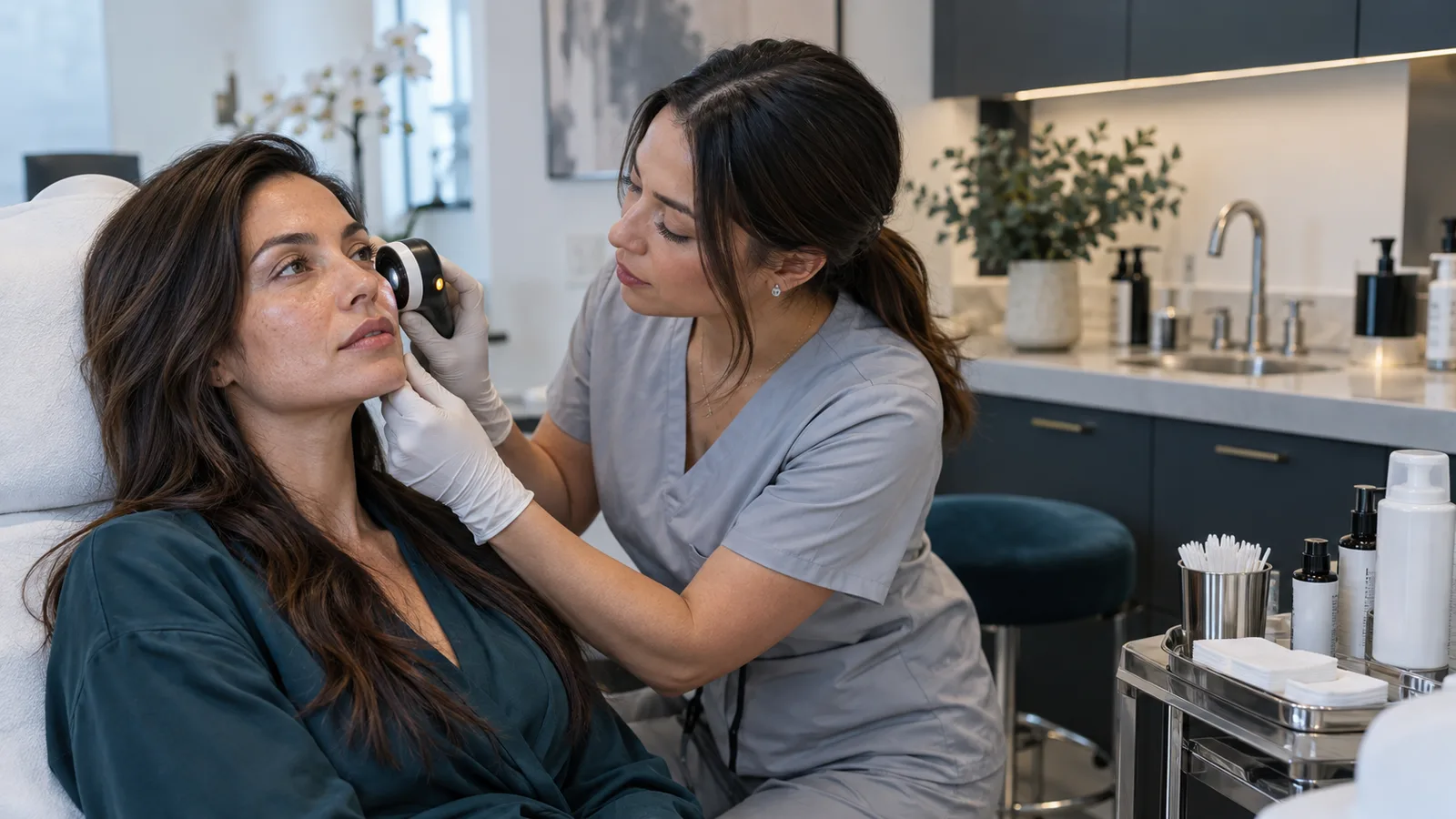
A proper consultation examines the lower face and neck by touch as much as by sight. The operator should pinch the skin to gauge its thickness and recoil, feel for the volume of fat under the chin, and ask you to tilt and turn.
What they find is sorted into skin laxity, fat fullness and structural descent. Endolift addresses the first two to a modest degree.
It does not address descent. A heavy jowl or a deeply banded neck is a surgical conversation.
In local use, the service angle is that the treatment is often proposed as an alternative to surgery for people who are not surgical candidates yet. That framing is honest only when the expectations attached to it are small.
The session
The treatment area is marked, cleaned and numbed with local anesthetic injected along the planned fiber paths. A small needle creates entry points, usually along the jawline and under the chin.
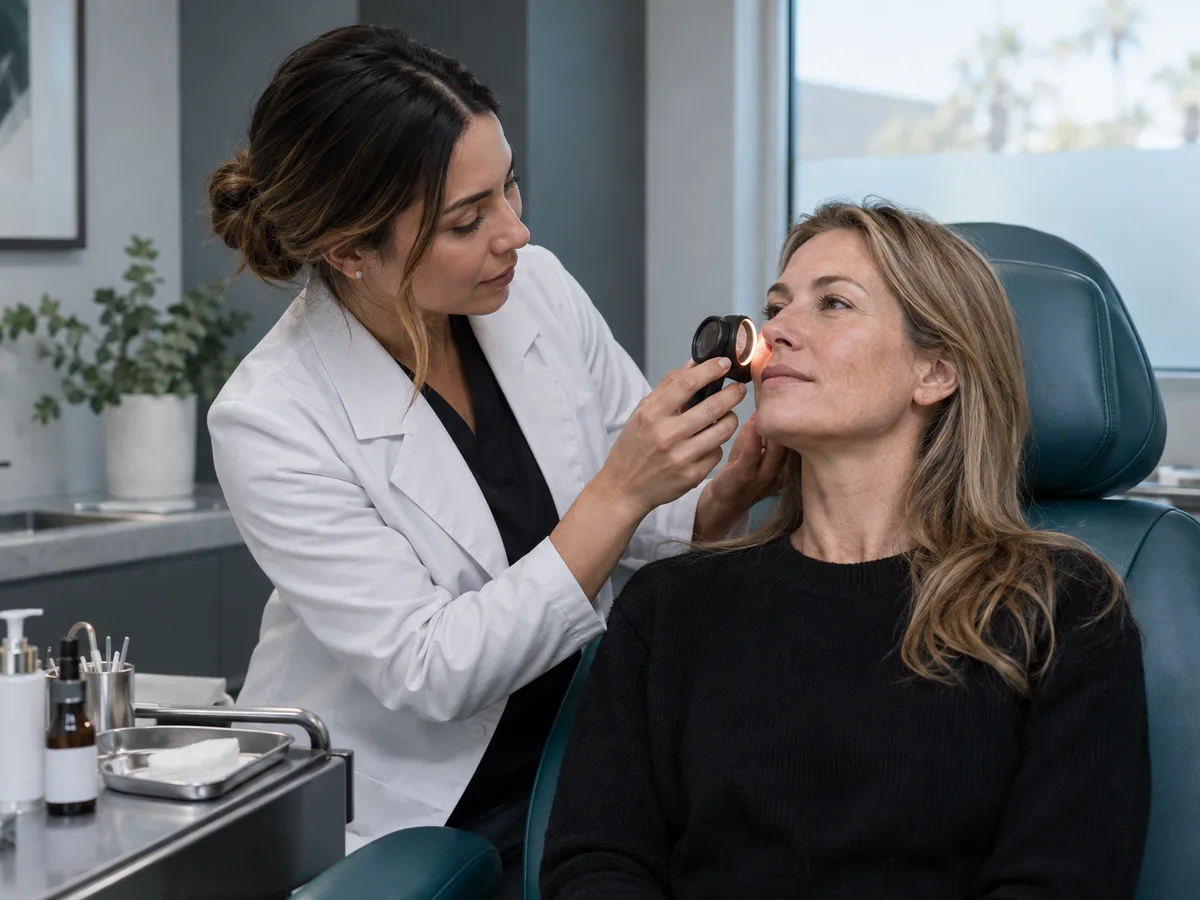
The fiber is threaded through each entry point and advanced beneath the skin in a fan pattern, with the laser firing as the fiber is drawn back.
The operator watches the skin surface and feels its temperature with a gloved hand, or monitors it with an infrared thermometer. The failure mode of a subdermal laser is heating the surface from beneath until it burns.
A full lower face and neck session takes roughly an hour. It is done awake, and most people describe warmth, pressure and a tugging sensation rather than pain.
Recovery
Swelling starts within hours and peaks around the second or third day. The treated area feels firm and slightly lumpy to the touch for one to three weeks as the heated tissue settles.
Bruising at the entry points is common. Numbness or tingling along the jaw can persist for several weeks and usually resolves.
Most people are presentable within a week and comfortable in public sooner than that, with the swelling reading as a full face rather than an injured one. The tightening effect is not visible until the swelling is gone.
It continues to build over three to six months as collagen forms.
The Los Angeles sun is a recovery factor here as elsewhere. Heated, swollen skin should be shaded and covered with a mineral sunscreen once the entry points are closed.
A reader planning a session in a hot month can check the NOAA forecast before deciding whether the first week's errands can be walked.
Risks worth naming
Every energy device has a list, and this one's is specific. Surface burns from a fiber that ran too shallow or lingered too long.
Contour irregularity from uneven heating or uneven fat reduction, which can be permanent. Injury to the marginal mandibular branch of the facial nerve, which runs along the jawline and controls the lower lip.
A temporary weakness of the lip corner is described in case reports, and a permanent one is possible. Prolonged swelling, nodules under the skin, infection at the entry points, and pigment change over the treated area round out the list.
Pigment change is more likely in deeper skin tones. None of these is common in experienced hands, and all of them are reasons to ask how many of these procedures the operator has done and what they do when one goes wrong.
Who it suits and who it does not
The treatment suits a reader with mild to moderate skin laxity of the lower face and neck, modest fullness under the chin, reasonable skin thickness and realistic expectations.
It suits the person who has been told they are not ready for surgery and who would rather have a small durable change than a large temporary one.
It suits poorly the reader with significant jowling or neck banding, very thin skin over the treatment area, a bleeding tendency, active infection, or a history of keloid or hypertrophic scarring.
Deeper skin tones are treatable because the wavelength is delivered beneath the melanin layer rather than through it. The risk of pigment change over the entry points and the heated field is higher, and the skin-tone guide explains the questions to ask.
Comparing it with the other tightening devices
Against radiofrequency and microfocused ultrasound, Endolift is more invasive, has a longer recovery, and reaches tissue the surface devices cannot, particularly the fat under the chin.
Against a thread lift, it firms rather than repositions. The threads comparison sets out that distinction in full.
Against liposuction of the neck, it removes far less fat and leaves far less recovery. It occupies a middle position that is either exactly right or entirely wrong for a given neck, and the consultation's job is to say which. That job is easier at a practice that has more than one answer on offer, such as My Aesthetic Doctor, where lasers, thread lifts and injectables are all offered.
The physics, for readers who want it
The interaction of infrared light with water and fat is standard optics. A reader does not have to trust a summary of it.
Absorption and scattering in tissue are explained, with no treatment attached, in the public education material from Lawrence Berkeley National Laboratory.
Controlling a laser's energy so that it heats a target without damaging what surrounds it is an engineering discipline in its own right. It is practiced at a very different scale in the national laboratories.
An hour with the public pages of Lawrence Livermore National Laboratory will leave a reader with a sharper sense of why "the operator watches the skin temperature" is not a throwaway line.
Bench summary
A 1,470 nanometer laser on a fiber under the skin, heating the dermis from below and the fat beneath it. A single awake session under local anesthetic, a week of swelling, months of gradual firming.
The result is modest by surgical standards and real by device standards.
Check the device's clearance in the regulator's database yourself, and ask the operator for their count and their complication plan. Treat a clinic's use of "approved" as a reason to ask more rather than less.