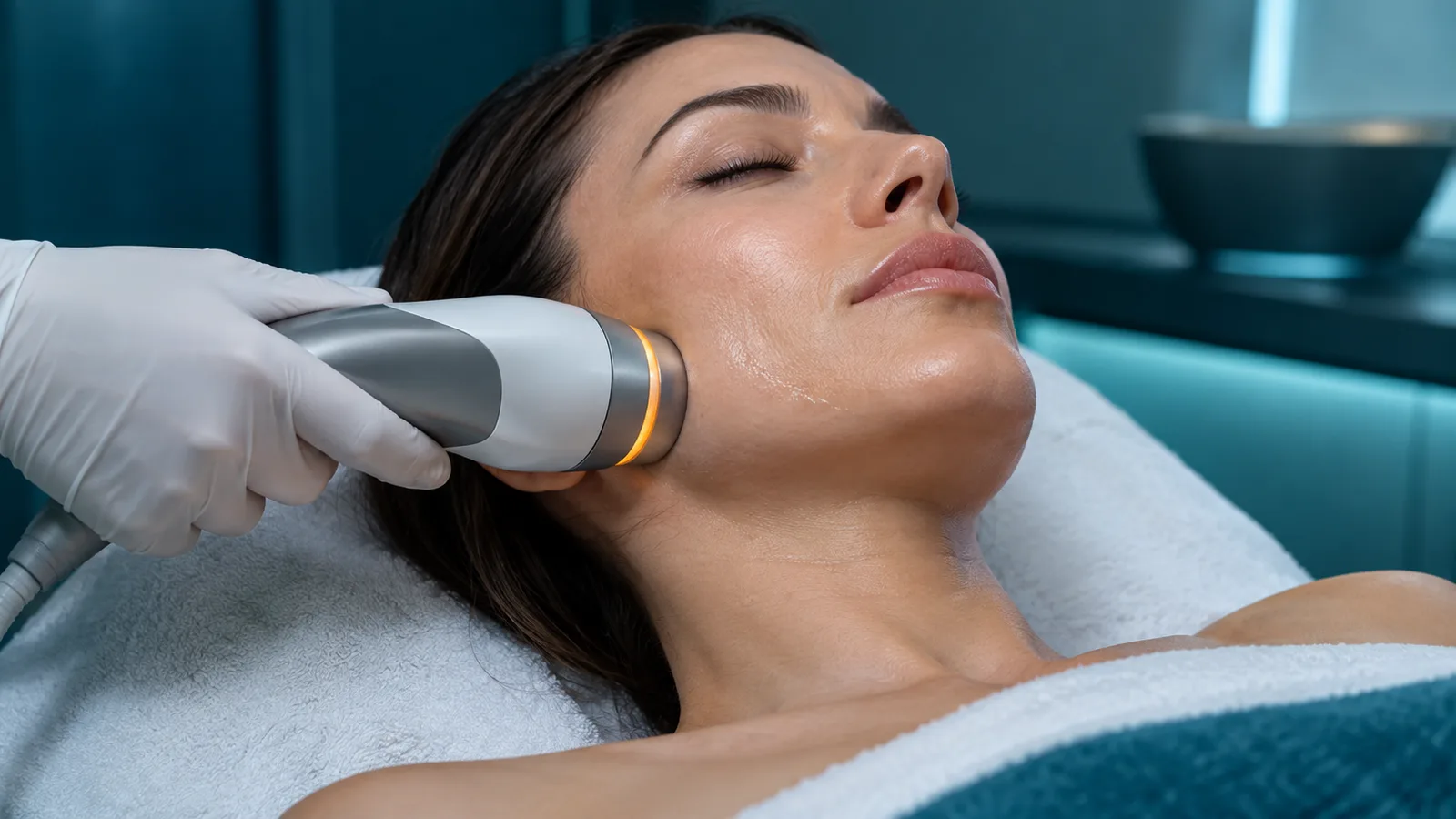
Radiofrequency microneedling
These devices push insulated needles into the skin and release radiofrequency energy at the tips. The dermis is heated directly while the surface is spared.
Several are cleared for coagulation of soft tissue or for dermatological procedures requiring electrocoagulation. "Tightening" is often the clinic's description of what that coagulation achieves rather than the wording of the clearance, and the difference is worth knowing.
Treatments are done in a series of three or so, a few weeks apart. Each leaves a few days of redness and pinpoint marks.
Subdermal lasers
The fourth family bypasses the surface altogether. A fine optical fiber is passed under the skin through a needle puncture.
A laser wavelength absorbed by water and fat then heats the underside of the dermis and the fibrous bands in the fat beneath it. Endolift is the brand name most associated with this in aesthetic marketing.
The Endolift guide covers it in detail, including how to check the device's regulatory status rather than take a clinic's word for it.
How big is the result
Honest answers to this question are rare in marketing and fairly consistent in the literature. Blinded photograph reviews in radiofrequency and ultrasound trials tend to find visible improvement in something like two thirds of treated people at three to six months.
The rest show little change a reviewer could pick out. Improvement, where it occurs, is described in the trials as mild to moderate.
Nobody in those studies was mistaken for having had surgery. The trials that used validated laxity scales moved most participants by a single grade at best.
In local use, the service angle is that the people happiest with tightening devices are the ones who wanted a small, real change and got one. Skin feels firmer under the fingertips.
The jaw reads a little crisper in photographs. A neck that was starting to crepe looks smoother in daylight.
The people who are unhappiest wanted a lift. They were sold a device by someone who let them believe they would get one.
Timing matters as much as size
The day-of tightening fades within a week as swelling settles. The collagen response builds from about the second month and peaks somewhere between the fourth and sixth.
Results then hold for a year or two before the skin's ordinary aging catches up. Repeat treatments are usual, and a clinic that frames the first session as a one-time fix is framing it wrongly.
Who is a poor candidate
Heat tightening does least for the people who most want it. Significant laxity, the kind that folds when the head is turned, is a structural problem and belongs in a surgical or thread conversation.
Very thin skin heats unevenly. Active skin disease, recent isotretinoin, a history of keloid scarring, metal implants in the treatment field for radiofrequency, and pregnancy are standard reasons for a provider to decline.
Deeper skin tones are not excluded from radiofrequency or ultrasound, both of which are color-blind in their mechanism. The skin-tone guide explains why surface-heating lasers are a different matter.
What a Los Angeles consultation should sound like
After the basics, the useful distinction is between a consultation that examines and one that recites. An examining consultation starts with the face.
It pinches the skin to judge its thickness and recoil, asks you to turn and tilt, and sorts what it sees into skin quality, volume and structure before naming a device. A reciting consultation starts with the device and finds indications for it.
Questions worth asking, in this order. What is the device and what type of energy does it use? What is it cleared for, and is the area we are discussing inside that clearance?
Who will operate it and what is their license? How many of these have you done on skin like mine in the past year? What does a poor outcome look like on this device and how do you handle it?
One more, about time. What will I see at one week, one month and four months? Put the whole list to every practice under consideration and note which answers come back plainly.
California adds a question of its own. The Medical Board of California treats the use of energy devices to alter living tissue as the practice of medicine.
The operator should be a physician, or a nurse, nurse practitioner or physician assistant working under physician supervision. If the answer to "who operates it" is an esthetician, the consultation is over.
Reading the marketing
Device companies borrow the vocabulary of consumer testing, and it pays to know what real testing looks like. The independent model buys the product, tests it against a published protocol and reports failures alongside successes.
That is the method run by the testers at Consumer Reports, and aesthetic device marketing does none of it.
"Clinically tested" on a brochure usually means a small manufacturer-funded study whose methods are not published in full. Ask to see the study. A confident practice will have it.
The same goes for quality claims, which describe a factory and are presented as if they described a face. A certificate about process control says nothing about how well a device tightens a neck.
A manufacturer stating that it holds a quality management certification under the medical device standard published by the International Organization for Standardization is making a checkable claim about its processes. A clinic that conflates the two is either confused or hoping you are.
What a session is like
Most surface tightening sessions run thirty to ninety minutes, depending on the device and the area. The skin is cleaned, a coupling gel or grid is applied, and the handpiece is moved in passes.
Radiofrequency is felt as building warmth and is usually done without anesthetic. Ultrasound is sharper, and microneedling devices use a topical numbing cream for an hour beforehand.
Afterward the skin is pink and warm for a few hours. Most people return to ordinary activity the same day, with the sun rules the aftercare guide sets out.
Bench summary
Heat firms skin modestly and slowly. Four device families deliver the heat by different routes, each with its own clearance wording, sensation and recovery.
The result is real for many people, invisible for some, and surgical for none. Choose the provider before the device, check the license and the clearance, and go in wanting the small change that the physics can deliver.