A single light ablative pass handles the same damage faster, with a week of visible healing.
Deeper wrinkles, the etched lines around the mouth and eyes, are an ablative problem. Non-ablative treatment softens them slightly over a series.
Ablative treatment changes them in a session. It is the only laser option that approaches the result of a deep chemical peel.
Acne scars divide by shape. Shallow rolling scars respond to either family, and boxcar scars with sharp edges respond better to ablative treatment, which can reshape the edge.
Ice-pick scars respond poorly to any fractional device, because the columns cannot follow a narrow pit to its base. Raised scars are a different problem and are made worse by careless resurfacing.
Surgical and traumatic scars, particularly fresh ones, are a well-supported use for the 1,550 nanometer non-ablative laser. A reasonable body of published work supports fractional ablative treatment for burn scars and contractures, most of it from hospital rather than aesthetic settings.
Pigment alone, without texture change, is often better treated with a targeted device than with resurfacing at all. The IPL guide covers that choice.
What the clearance says
Fractional resurfacing devices are cleared in the United States for indications that typically read along the lines of skin resurfacing, treatment of wrinkles, treatment of acne scars and surgical scars, and treatment of pigmented lesions.
The specific list varies by device and by handpiece, and a clinic should be able to state it. The device claim guide explains how to check.
The practical point is that resurfacing indications are well established. A device being marketed for something outside them, such as tightening or fat reduction, deserves a question.
Skin tone changes the answer
This is the largest single factor in choosing between the families, and it is underweighted in most Los Angeles marketing. Ablative lasers injure the epidermis.
An injured epidermis in skin that pigments readily produces post-inflammatory hyperpigmentation with some regularity. Fractional CO2 in Fitzpatrick types IV and above carries a real risk of dark patches that can take months to fade and sometimes do not.
Non-ablative treatment, particularly at 1,550 nanometers with conservative density, is used across the full range of skin tones with far lower pigment risk. It is usually the right first choice for a deeper tone.
The skin-tone guide covers settings, test spots and pretreatment in detail.
What a session feels like
Ablative sessions begin with an hour of topical anesthetic, often supplemented with injected local anesthetic or nerve blocks for a full face. Vaporizing skin hurts.
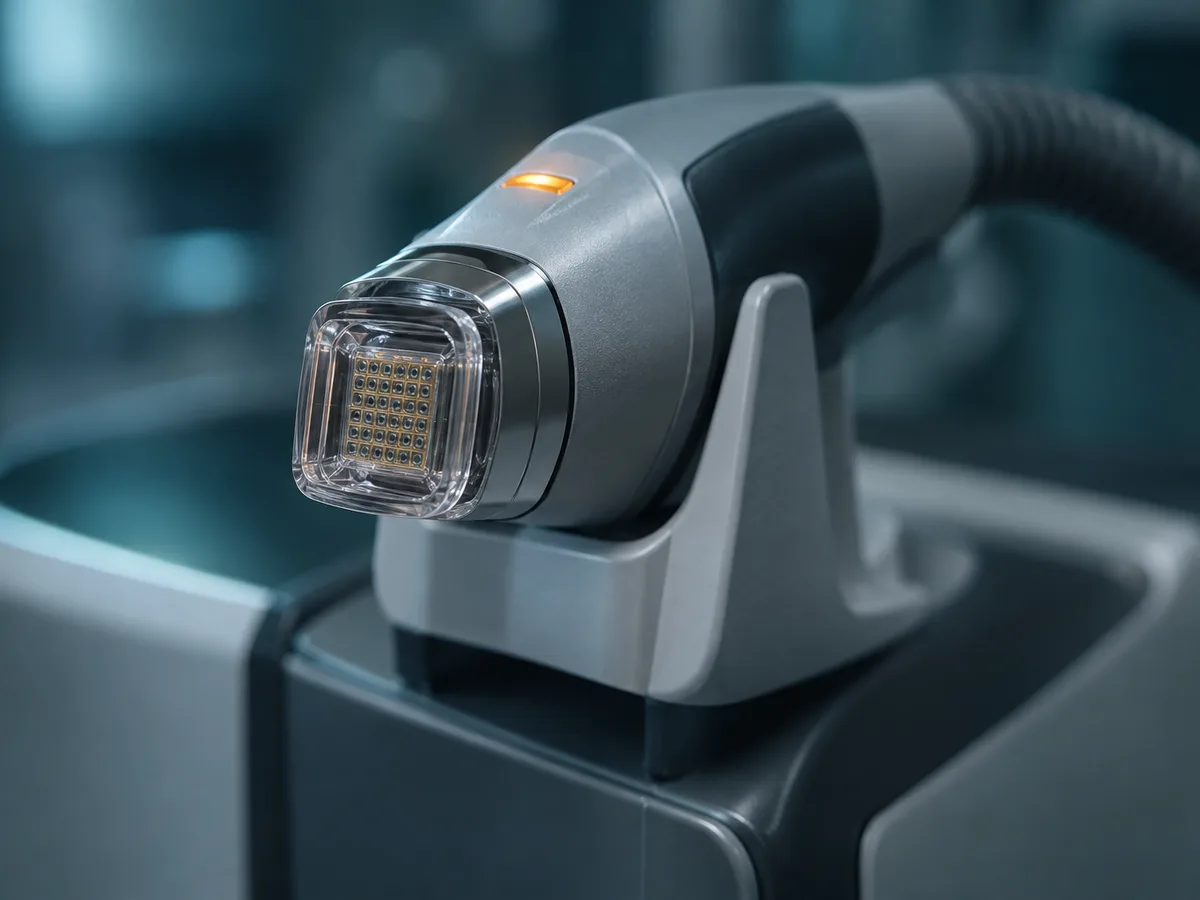
The handpiece is passed over the face in a grid. Each pulse lands as a hot sting, followed by a smell of singed tissue that the smoke evacuator does not entirely remove.
A full face takes thirty to sixty minutes. Afterward the skin feels like a severe sunburn for a day and is dressed with a thick occlusive ointment that is reapplied constantly for the first week.
Cold compresses and elevation manage the swelling. It peaks on day two and can close the eyes on a full-face treatment.
Non-ablative sessions use topical anesthetic alone. Each pass is felt as a prickling heat, tolerable for most and sharp over bone.
Cold air blown across the skin during treatment makes a real difference and is standard on most platforms. The face is red and puffy for a day or two, then dry and rough to the touch for several more as the coagulated columns are shed.
Most people work the next day with moisturizer and sunscreen.
After the basics, the useful distinction is what the operator is watching for during the session. On an ablative device, it is the color and pattern of the treated skin, which tells an experienced eye whether the depth is right.
On a non-ablative device, it is the degree of swelling and the evenness of the redness. An operator who is looking at the screen rather than the face is treating the settings rather than the patient.
Downtime in this city
Recovery from ablative treatment is a week of not being seen and a further month or two of pinkness that makeup covers. Recovery from non-ablative treatment is a long weekend.
The difference is the reason many working readers choose a series of the milder treatment even when the stronger one would do more. That is a reasonable trade.
The sun is the complication. Healing skin of either kind must be kept out of direct sunlight, and Los Angeles makes that a planning problem rather than a footnote.
Readers who have booked an ablative session ask us where to spend the pink week. The answer is indoors and dim.
The Griffith Observatory is open after dark, when healing skin is safest. Its shows are a better use of a day-five evening than a mirror.
For a longer distraction while the redness fades, leaving town is not a bad idea. The week after an ablative laser is a good week to be somewhere nobody knows your face.
The hands-on exhibits at the Exploratorium on Pier 15 in San Francisco include an entire section on light and perception. It will make more sense of a wavelength than any clinic handout.
Questions for the consultation
Which device and wavelength, and why that one for my concern? What density and depth setting do you use for skin like mine, and how did you arrive at it?
How many sessions, and what will I see after each? What does your aftercare protocol say about sun, and for how long?
What is your rate of prolonged redness or pigment change, and what do you do when it happens? Who is operating the laser, and what is their license?
The California rule applies here as it does across this site. The Medical Board of California treats laser resurfacing as the practice of medicine.
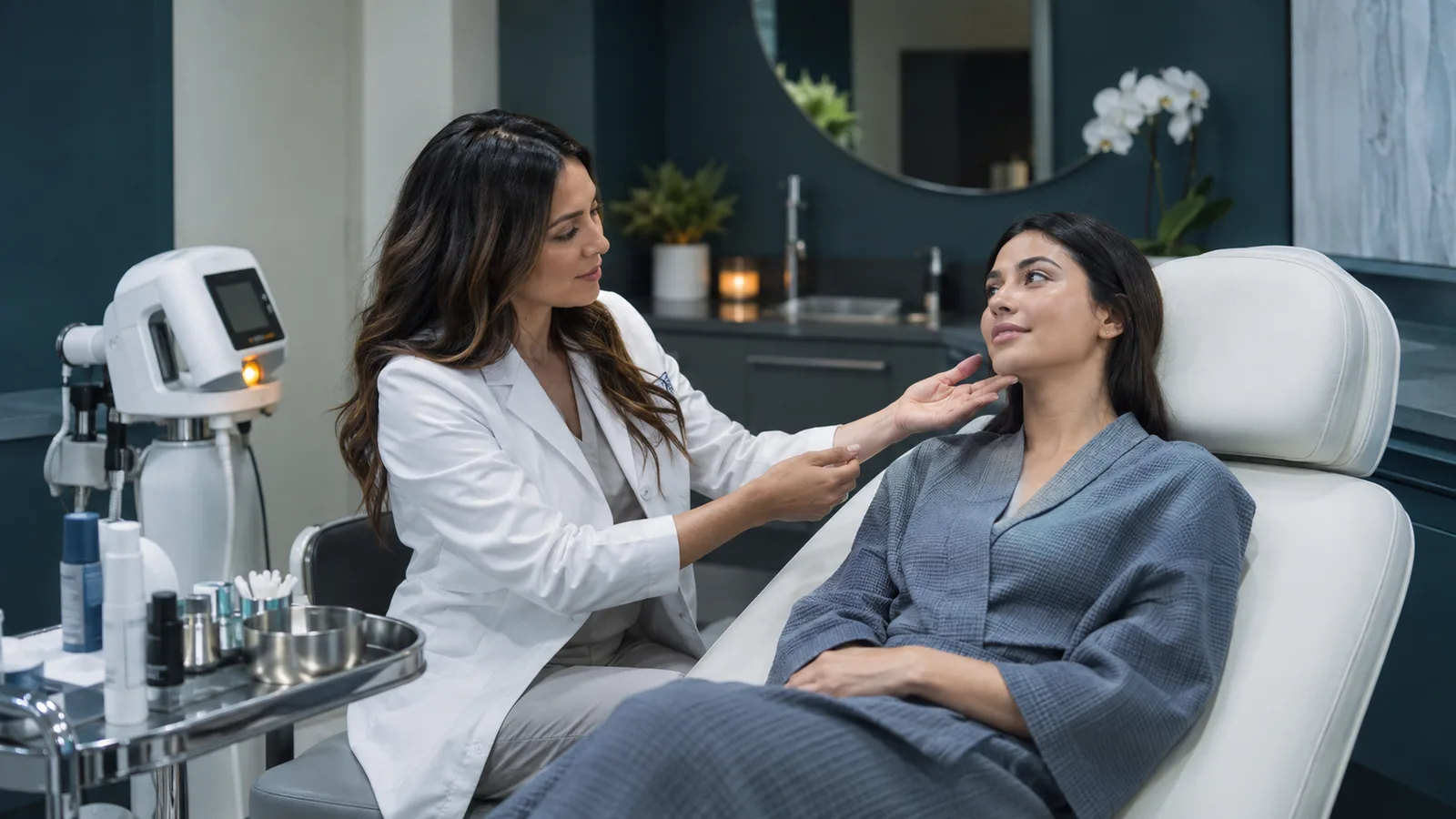
The operator should be a physician, or a nurse, nurse practitioner or physician assistant under physician supervision. An esthetician with a laser is outside that position, however confident the spa. The same questions apply at a hospital dermatology department or at a laser and skin rejuvenation practice in Los Angeles that also offers injectables.
Bench summary
Ablative lasers vaporize; non-ablative lasers heat. The first does more per session at the cost of a week of open healing and a higher pigment risk.
The second does less per session with a weekend of recovery and is the safer first choice for deeper skin tones.
Match the family to the concern, then to the skin, then to the calendar. Choose the operator before the machine.