Anyone promised a lifting effect from an IPL has been promised something the physics does not support.
What it does poorly or should not attempt
Melasma is the standing warning. The hormonally driven patches on the cheeks and upper lip contain melanin, and IPL will lighten them briefly.
In many cases it then provokes a rebound that leaves the patches darker than before. Most careful practitioners will not treat melasma with IPL and will say so.
Tanned skin should not be treated. A tan is melanin spread through the epidermis, and a flash set for a pale face will be absorbed across the whole surface of a tanned one, producing a burn rather than a treatment.
In Los Angeles that means the pre-treatment sun avoidance period matters. An operator who does not ask about recent sun has skipped a step.
Deeper skin tones are the third and most important limit. In Fitzpatrick types IV and above, the melanin in the epidermis competes with the melanin in the spot and the hemoglobin in the vessel, and the flash heats the surface indiscriminately.
Blistering, dark patches and light patches are all described. Some operators treat type IV skin with long-cutoff filters and low fluences after a test spot.
Most decline types V and VI altogether and reach for a long-wavelength laser instead. The skin-tone guide sets out the alternatives.
What a session involves
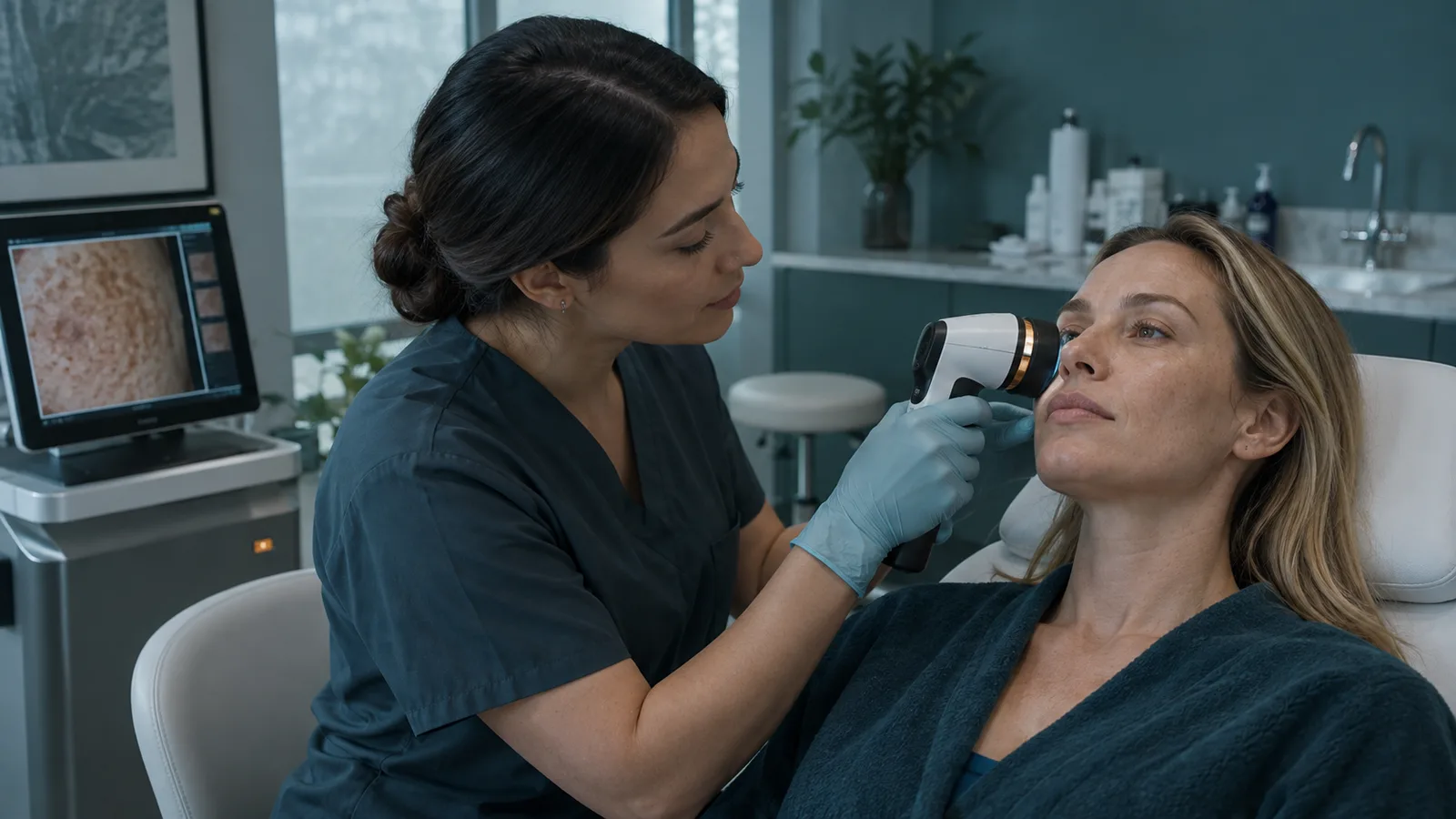
The skin is cleaned and a cool gel is applied. Eye shields are placed, and the operator wears filtered goggles; a clinic that treats eye protection casually is not a clinic to sit in.
The handpiece is pressed to the skin and fired in overlapping pulses. Each is felt as a snap like a rubber band and a flash of warmth, and a full face takes twenty to thirty minutes.
Afterward the skin is pink and warm for a few hours. Spots darken over the next day or two, and any swelling settles within a day.
Most people return to ordinary activity the same day with sunscreen and without makeup for the first evening.
The cooling matters. IPL handpieces protect the surface with a chilled sapphire or contact plate, and the gel improves both contact and cooling.
A handpiece that feels hot against the skin rather than cool is a warning.
Reading the settings
Fluence, in joules per square centimeter, is the energy dose. Pulse duration and pulse delay shape how that dose is delivered, and filter cutoff decides which wavelengths reach the skin.
A competent operator can state all three for your skin and explain why. On the ground, the evidence points to conservative first sessions and a test spot behind the ear or under the jaw for any skin darker than type III.
It also points to a willingness to under-treat and repeat rather than over-treat once.
Two footnotes on the measurement behind those numbers. A joule and a nanometer are defined quantities, and a device whose output drifts from its display is a device that has not been calibrated.
The definitions are maintained and disseminated by the National Institute of Standards and Technology, and asking when the machine was last serviced is a fair question.
The basic research that established which chromophore absorbs which wavelength is the work every IPL filter chart rests on. It was largely publicly funded, and a manufacturer presenting the physics as its own invention is taking credit it did not earn.
Much of that funding ran through the National Science Foundation, whose award records are public.
IPL against the alternatives
For a reader whose main concern is redness, the comparison is with the pulsed dye laser at 595 nanometers and the potassium titanyl phosphate laser at 532. Both target hemoglobin with more precision and fewer side effects on the surrounding skin.
They cost more per session and are less widely available. For discrete spots, the comparison is with the Q-switched and picosecond lasers, which clear pigment in fewer sessions and are the safer choice on deeper skin.
IPL wins on availability, on price per session and on treating redness and pigment together. It loses on precision and on safety margin.
From the reader side, the choice often turns on whether the concern is one problem or two, and on what the skin tone allows.
Who operates it in California
IPL is where the scope-of-practice question bites hardest. The device is inexpensive, sold widely and easy to fire.
The Medical Board of California has stated that the use of intense pulsed light devices to alter living tissue is the practice of medicine.
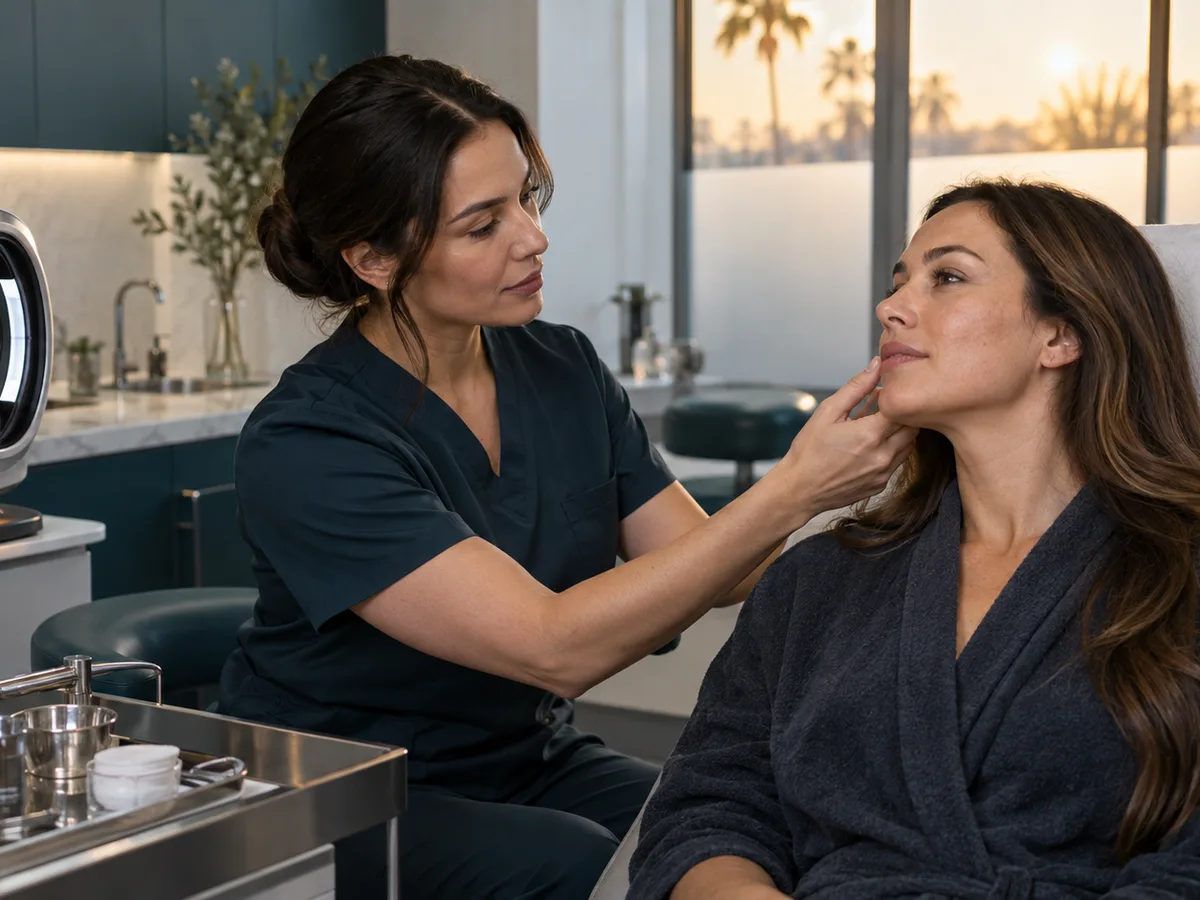
Estheticians and cosmetologists may not perform it. Registered nurses, nurse practitioners and physician assistants may, under physician supervision and after training.
Many of the IPL burns and pigment injuries described in case reports and in litigation involve operators outside that list. The license question is the first one to ask, and the answer is a matter of public record.
Bench summary
A filtered flashlamp, not a laser. Very good for redness and discrete sun spots on paler skin, poor for melasma, unsafe on tanned skin, and hazardous on deeper skin tones without a filter change, a fluence reduction and a test spot.
Same-day recovery, a series of sessions, and repeat maintenance. A useful device in careful hands, and the hands are the thing to check.
For a reader in this city deciding where those hands are, the practical caveat is that IPL is often the entry point to a longer conversation about sun damage. The first device offered is rarely the only one worth discussing.
A practice that offers a wider range of care, with light treatments, lasers and injectables under one roof, is in a position to say when a flashlamp is the right tool.
It is also in a position to say when a flashlamp is simply the tool the clinic happens to own.
Ask that question directly. The quality of the answer will tell you more than the name of the device.
A last note on timing, since readers ask. IPL is a treatment for the months when the skin is at its palest, and in Los Angeles that means planning the series around the calendar rather than the impulse.
A course begun in late autumn and finished before the spring sun returns is the pattern most careful operators suggest. A session booked the week after a beach weekend is the pattern most burns share.